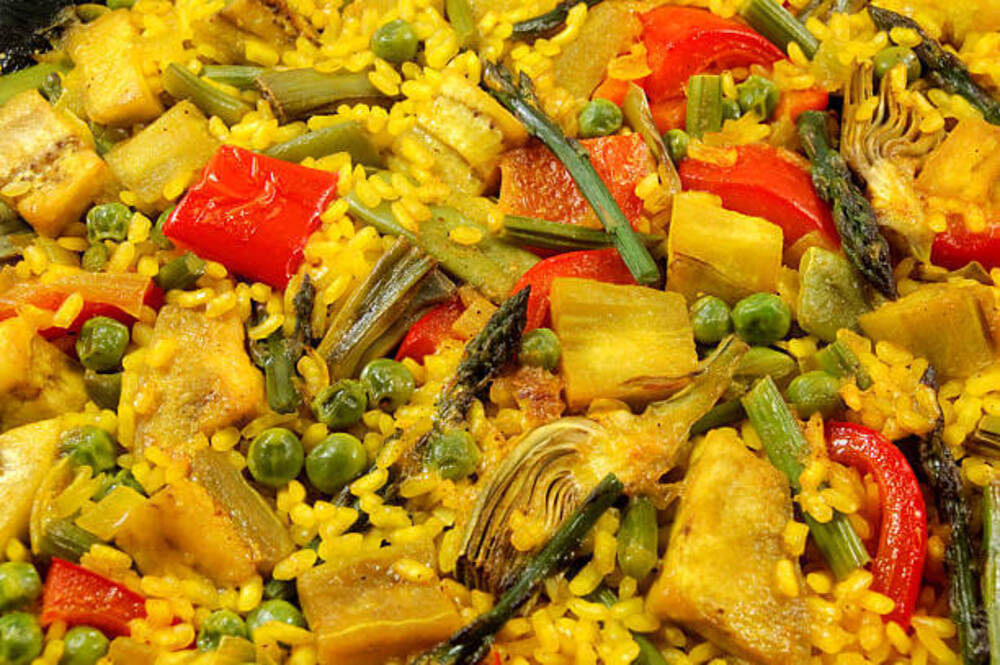
Ingredients
Method
- In a medium saucepan, warm the vegetable broth over medium-high heat. Break the saffron threads into the broth. Once it starts to simmer, give it a minute before reducing the heat to keep the broth warm.
- Heat 2 tablespoons of olive oil in a 12-inch Paella pan (or a similar-sized skillet) over medium heat. Once the oil is hot, add the diced onions and bell pepper strips. Sauté until they become soft and lightly browned, approximately 3-5 minutes.
- Incorporate the garlic into the pan and sauté for about 1 minute until fragrant.
- Add the diced tomatoes, smoked paprika, and sweet paprika to the pan, sautéing for 1-2 minutes. If using dried thyme, add it at this stage.
- Pour the remaining 1 tablespoon of olive oil into the pan and add the rice. Stir well to ensure the rice is thoroughly coated and lightly toasted, cooking for about 1 minute. Stir occasionally to prevent the rice from sticking.
- Introduce the fresh thyme and slowly pour in the warm broth. Season with salt and pepper. From this point, avoid stirring to prevent the rice from becoming creamy. Increase the heat to medium-high to bring the broth to a strong simmer for 1-2 minutes.
- Reduce the heat to a mild simmer (between medium-low and medium). Maintain visible movement in the pan without boiling, allowing the broth to cook down for 15-20 minutes until the rice is al dente. Rotate the pan occasionally for even heat distribution.
- As the broth is almost entirely absorbed, pay close attention to the formation of the socarrat, the golden crust at the bottom of the pan. You should hear a snapping, crackling, and popping sound, accompanied by a nutty aroma, signaling its formation. This process should take 1-2 minutes. Test by sticking a fork or spoon to the bottom. If it smells like it’s burning, remove the pan from heat immediately.
- Take the pan off the heat and scatter the peas over the top of the rice without mixing them in. Cover the pan with foil and let the paella rest for 5-8 minutes. Garnish with freshly chopped parsley and cracked black pepper, and serve with lemon wedges. Enjoy!
Notes
Sometimes achieving the perfect socarrat can be challenging, and that's okay. Various factors like the type of pan, fat content, heat source, and your experience level can affect it. The more you cook paella, the better you'll become at recognizing the signs. I've had instances where I left it on too long, resulting in a burnt bottom. It's never fun, so it's better to have no socarrat than a burnt one. Rest assured, your paella will still taste fantastic without it.
Saffron imparts a distinct, earthy, and floral flavor to the paella. It's subtle but truly completes the dish, also giving the rice a beautiful golden color. While saffron can be pricey, you can substitute it with turmeric if it's not within your budget. Turmeric will give the rice a similar golden hue and a different, but still subtle, flavor.
If you don't have a paella pan, I recommend using a large stainless steel pan. Avoid using non-stick pans as they won't yield the same results.
*Step-by-step photos are provided above.