Ingredients
Method
Preparing and Salting the Cabbage
- Trim any overly protruding cabbage cores to ensure easier handling. To avoid damaging the compact inner leaves, begin by making a small incision at the base of each cabbage, then carefully pull it apart into two halves. Once halved, make another shallow slit two inches above the stem to loosen the leaves while keeping them attached.
- Submerge the cabbage halves in a large basin of water, ensuring they are evenly moistened. Lift each leaf gently and sprinkle salt between them, concentrating more salt toward the thicker stems where the leaves are denser. Allow the salted cabbage to rest for two hours, turning them every 30 minutes to ensure uniform salting. Occasionally, spoon the salty water from the basin over the cabbage to enhance the process.
- After two hours, thoroughly rinse the cabbage under cold running water multiple times to remove excess salt and any residual dirt. As you wash, split the cabbage halves into quarters along the incisions made earlier. Trim off the tough core, give the pieces a final rinse, and set them in a colander or strainer to drain completely.
Making the Porridge
- While waiting for the cabbage to salt, prepare the seasoning porridge. In a small saucepan, whisk together water and sweet rice flour until fully combined. Cook over medium heat, stirring constantly, until the mixture thickens and starts to bubble, approximately 10 minutes. Stir in the sugar and cook for an additional minute before removing from heat. Let the porridge cool completely before use.
Mixing the Seasoning Paste
- Transfer the cooled porridge into a large mixing bowl. Stir in the minced garlic, ginger, and onion, followed by the fish sauce, chopped fermented shrimp, and Korean red pepper flakes. Using a wooden spoon, mix thoroughly until the ingredients form a cohesive, thin paste.
- Add the radish matchsticks, carrots, and chopped green onions to the mixture. If using Asian chives or water dropwort, incorporate them at this stage. Stir well to ensure the vegetables are evenly coated in the seasoning paste.
Assembling the Kimchi
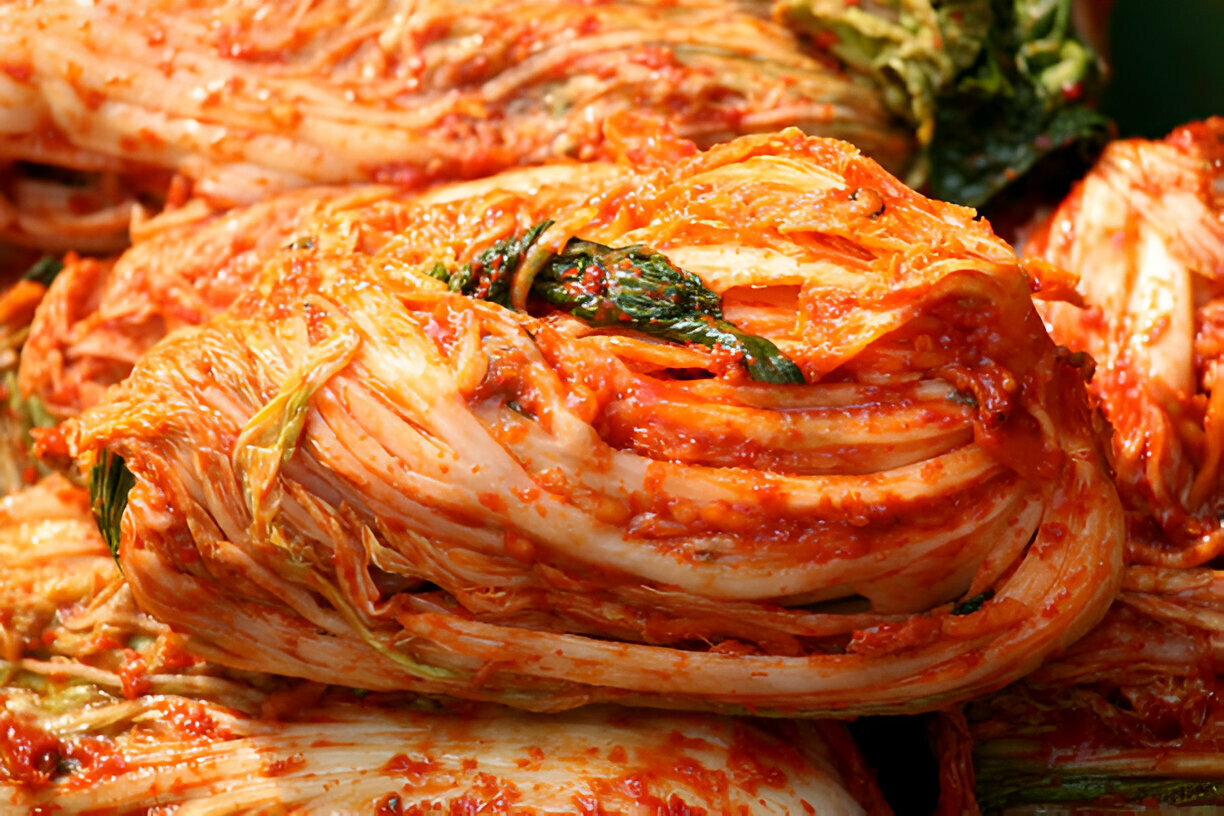
- Place a quartered cabbage in a large bowl. Using your hands (preferably gloved), apply the prepared kimchi paste generously to each leaf, ensuring every layer is evenly coated. Once fully covered, fold the quartered cabbage in on itself to create a compact bundle. Transfer the seasoned cabbage into an airtight jar, plastic container, or traditional onggi, pressing it down firmly to remove air pockets. Repeat this process with the remaining cabbage quarters.
- Kimchi can be eaten fresh at this stage or left to ferment for deeper flavors.
Fermentation Process
- The fermentation process begins within one to two days at room temperature, depending on the climate. Warmer, more humid conditions accelerate fermentation, while cooler environments slow it down. As fermentation progresses, the kimchi will develop a tangy aroma and flavor. Pressing down on the kimchi with a spoon will release bubbles, indicating active fermentation.
- If storing in a sealed jar, open the lid occasionally to release trapped gases and press the kimchi down to keep it submerged in its juices. Once fermentation begins, transfer the kimchi to the refrigerator to slow the process. Over time, the flavor will continue to evolve, becoming increasingly tangy as it ages.