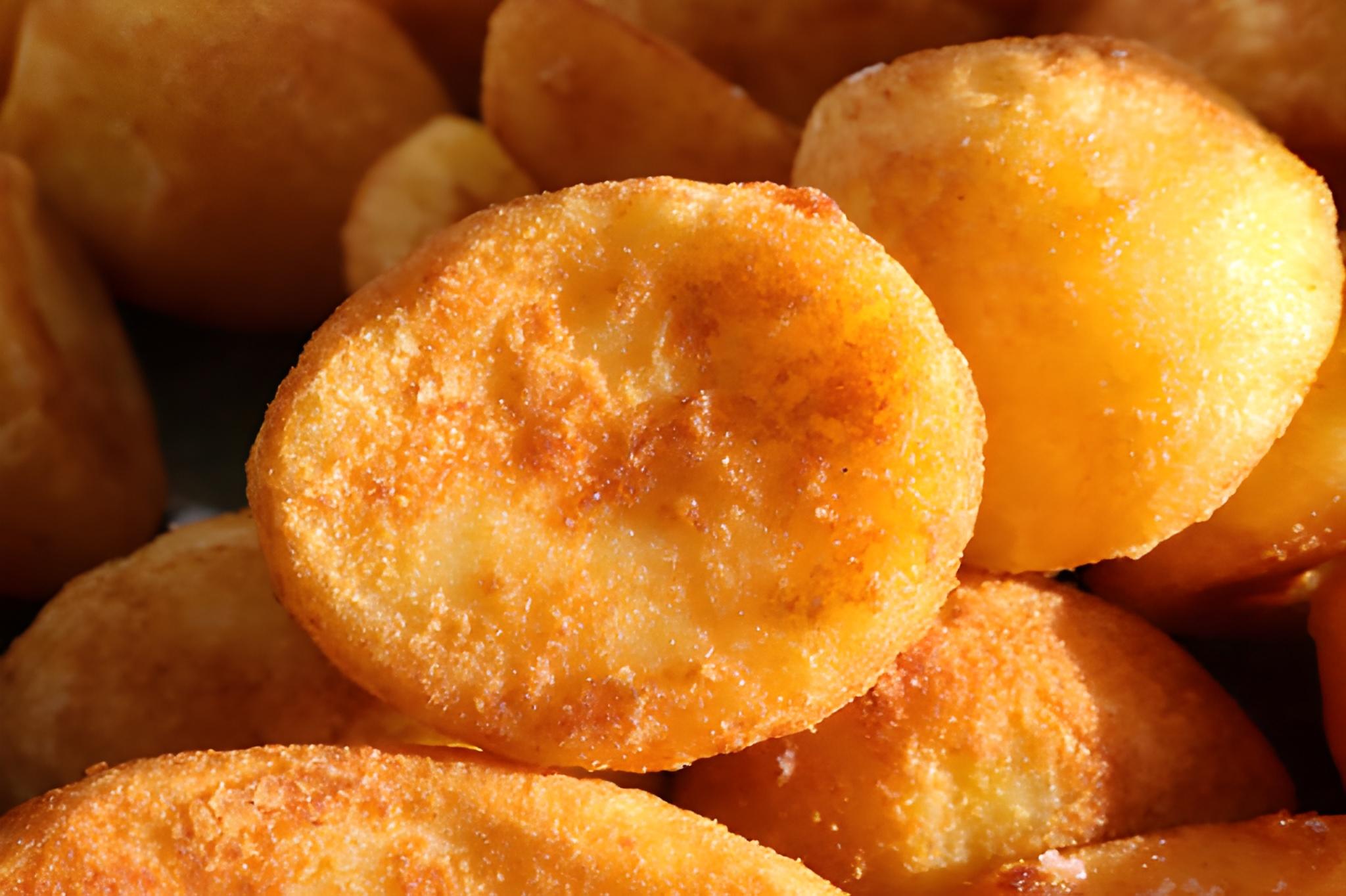
Duck Fat Potatoes Recipe
Crispy on the outside and fluffy at the center, these duck fat potatoes roast to deep golden perfection with rich, savory flavor. High heat and careful preparation turn simple potatoes into a standout side.
Print
Pin
Servings: 6 people
Calories: 380kcal
Ingredients
Roasting
- 200 g / 7oz duck fat or goose fat, Note 3
Par boiling
- 1.75 –2kg / 3.5–4lb potatoes medium to large (Sebago or Dutch Creams in Australia; Yukon Gold or Russet in the US; Maris Piper in the UK) (Note 1)
- 2 tablespoons semolina Note 2
- 1 tablespoon salt
- 1.5 teaspoons kosher salt
Serving, optional
- 2 teaspoons rosemary roughly chopped
- Sea salt flakes
Instructions
- Peel the potatoes, then cut them into evenly sized 7.5cm / 3-inch chunks to ensure consistent cooking. Preheat the oven to 230°C / 450°F (230°C fan-forced).
- Par boiling & roughing up: Bring a large pot of water to a rolling boil and add 1 tablespoon of salt. Add the potatoes and boil for about 10 minutes, just until the edges begin to soften. Drain thoroughly. Shake any remaining water from the pot, return it to the turned-off stove, then tip the potatoes back in and let them sit for 5 minutes so excess moisture can steam away.
- Sprinkle over the kosher salt and semolina. Place the lid on the pot and shake vigorously up and down 5 to 7 times. This roughs up the potato surfaces, creating a starchy coating that crisps beautifully in the oven.
- Roasting: Spoon the duck fat into a sturdy metal roasting pan (avoid glass or ceramic). Place the pan in the oven and heat for 5 to 7 minutes until the fat is shimmering and very hot, with faint wisps of smoke.
- Working quickly and carefully, remove the pan from the oven. Add the potatoes (take care—the fat will be extremely hot), turn them to coat evenly, then arrange them cut-side down. Roast for 25 minutes. Turn the potatoes, roast for another 15 minutes, then turn once more and roast for a further 10 to 15 minutes, until deeply golden, crisp on the outside, and fluffy inside.
- Transfer the potatoes to a warm serving bowl. Finish with sea salt flakes and chopped rosemary if using, and serve immediately while irresistibly crunchy.
Notes
Why this method delivers exceptionally crunchy roast potatoes:
Roasting in duck fat produces a noticeably thicker, more robust crust that stays crisp long after leaving the oven.
Par-boiling followed by roughing up the potatoes increases surface area, allowing a deeper, more substantial crunch to form.
Semolina adds a subtle extra bite; it is coarse enough to enhance texture yet fine enough to integrate seamlessly into the crust without being noticeable.
Preheating the fat is critical, creating an effect similar to deep-frying—immediate contact with very hot fat equals superior crisping. Key notes and tips:
Par-boiling followed by roughing up the potatoes increases surface area, allowing a deeper, more substantial crunch to form.
Semolina adds a subtle extra bite; it is coarse enough to enhance texture yet fine enough to integrate seamlessly into the crust without being noticeable.
Preheating the fat is critical, creating an effect similar to deep-frying—immediate contact with very hot fat equals superior crisping. Key notes and tips:
- Potatoes – Choose starchy or all-rounder varieties. Waxy potatoes do not crisp properly and are best avoided.
- Semolina – A coarsely ground wheat commonly used in pasta-making. This is the quiet hero for added crunch, blending into the coating rather than standing out. If unavailable, simply omit it. There is no true substitute; even fine cornmeal remains too coarse. Think of semolina as a finishing enhancement rather than a requirement—excellent results are still achievable without it.
- Fat – Goose fat performs just as well as duck fat, though it is less commonly used. If cooking with oil instead, a different method is recommended for optimal crunch.
- Cutting – Large potatoes should be cut into three pieces, medium ones in half. Generous sizing is essential to withstand the long roasting time without drying out.
- Roasting pan – While lighter pans can work, heavy metal roasting pans retain heat far better and produce superior results. Ceramic and glass pans are not recommended, as they often cannot tolerate the high oven temperature.
- Oil temperature – Test readiness by dropping in a small piece of potato; it should sizzle vigorously on contact.
- Reusing duck fat – Expect roughly half the fat to remain after roasting. Strain out any potato fragments, cool, and store in a jar in the refrigerator. It will keep for months, though it will carry some salt.
- Inspiration – This method is adapted from a well-known goose fat roast potato recipe popularized by Nigella Lawson. Duck fat is used here due to its wider availability.
- Nutrition – Values are calculated per serving, assuming approximately half of the duck fat remains in the pan after roasting.
Nutrition
Calories: 380kcal