Ingredients
Method
- Heat the ghee in a large frying pan over medium heat until hot.
- Add the finely chopped onion and cook, stirring frequently, for about 5 minutes until softened.
- Introduce the chicken breast pieces to the pan and cook for another 5 minutes, stirring occasionally, until the chicken is sealed on all sides.
- Stir in the minced garlic, ginger, cumin, ground coriander, garam masala, chilli powder, turmeric, salt, white pepper, and tomato puree. Cook for 2 minutes, stirring, to ensure the chicken is well coated with the spices.
- Pour in the yogurt, coconut cream, ground almonds, and sugar. Stir the mixture together, bring it to a gentle boil, then reduce the heat and simmer for 6-8 minutes until the chicken is thoroughly cooked.
- Add the double (heavy) cream, stirring to combine, and then turn off the heat.
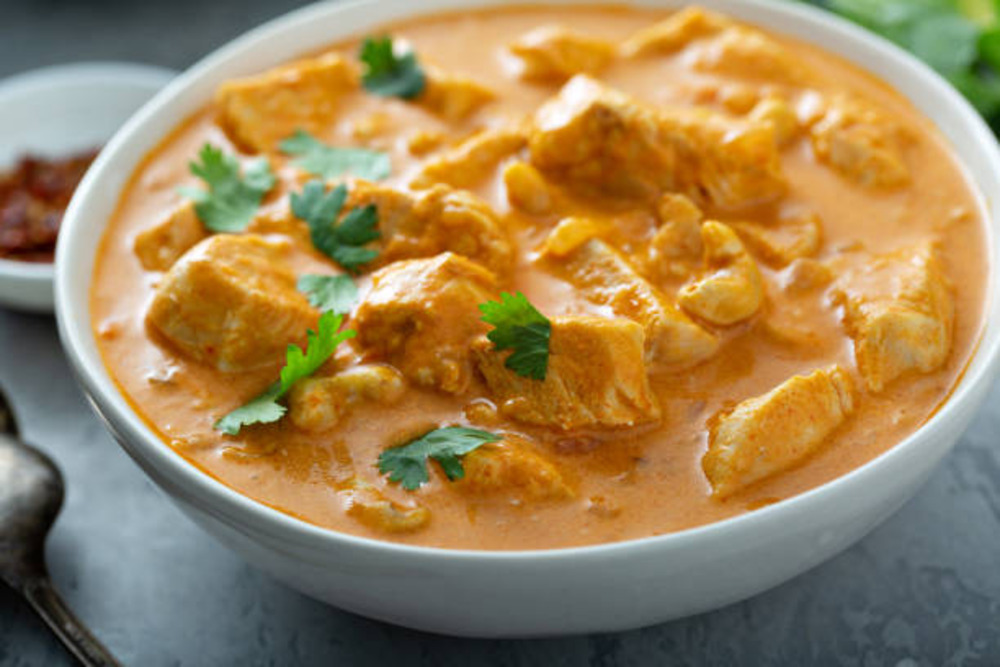
- Garnish the korma with freshly chopped coriander (cilantro) and serve it alongside boiled rice and/or chapati.
Notes
Coconut Cream
Coconut cream is thicker and has a higher fat content than coconut milk. You can use small tins of coconut cream or mix creamed coconut blocks with a bit of hot water to make coconut cream. For this recipe, I use coconut blocks. If you only have coconut milk, chill the tin overnight, then open it and use the solid portion at the top, leaving the liquid behind. Make-Ahead Instructions
Yes, you can prepare this curry in advance. After cooking, let it cool, cover it, and refrigerate it for up to a day. To reheat, place it in a pan over medium heat, stirring frequently until the chicken is thoroughly heated. You may need to add a little water or cream to loosen the sauce, as it tends to thicken upon reheating. Freezing Instructions
Freezing yogurt can sometimes be tricky as it may split or become grainy when defrosted. However, I’ve frozen and reheated this curry successfully. The key is to use full-fat cream and yogurt, as lower-fat dairy products are more likely to split or curdle. Cool the korma quickly and freeze it as soon as possible after cooking. It's best to freeze it in portions for quicker defrosting. Defrost in the refrigerator overnight, then reheat in a pan over medium heat, stirring often until piping hot throughout. Scaling the Recipe
You can double or halve this recipe, maintaining the same ingredient ratios. If doubling, the chicken will take slightly longer to cook. Nutritional information is per serving and does not include rice or chapati.
Coconut cream is thicker and has a higher fat content than coconut milk. You can use small tins of coconut cream or mix creamed coconut blocks with a bit of hot water to make coconut cream. For this recipe, I use coconut blocks. If you only have coconut milk, chill the tin overnight, then open it and use the solid portion at the top, leaving the liquid behind. Make-Ahead Instructions
Yes, you can prepare this curry in advance. After cooking, let it cool, cover it, and refrigerate it for up to a day. To reheat, place it in a pan over medium heat, stirring frequently until the chicken is thoroughly heated. You may need to add a little water or cream to loosen the sauce, as it tends to thicken upon reheating. Freezing Instructions
Freezing yogurt can sometimes be tricky as it may split or become grainy when defrosted. However, I’ve frozen and reheated this curry successfully. The key is to use full-fat cream and yogurt, as lower-fat dairy products are more likely to split or curdle. Cool the korma quickly and freeze it as soon as possible after cooking. It's best to freeze it in portions for quicker defrosting. Defrost in the refrigerator overnight, then reheat in a pan over medium heat, stirring often until piping hot throughout. Scaling the Recipe
You can double or halve this recipe, maintaining the same ingredient ratios. If doubling, the chicken will take slightly longer to cook. Nutritional information is per serving and does not include rice or chapati.